
Code & Storms
Florida Wind Code and Your Garage Door
Most Tampa homeowners have never thought about their garage door as a structural component. It is worth doing, because on a typical single-family house it is the largest opening in the building envelope and frequently its weakest point in a storm.
This is a plain-language overview rather than an engineering document. For anything involving permits, product approval numbers or an insurance dispute, you want a licensed engineer or your building department, not a repair company.
Why the garage door specifically
A garage door is a large, relatively thin panel spanning a wide opening with support only at the edges. Under high wind it wants to deflect inward, and past a point it fails.
What happens next is the part that matters. Once the door goes, wind enters the garage and pressurises the building from inside. That internal pressure pushes up against the roof structure at the same time as the wind outside is lifting it. This is a documented failure sequence in hurricane engineering, and it is why building codes single garage doors out for specific treatment rather than treating them as joinery.
What the code requires
Florida’s statewide building code, first effective in 2002 and tightened since, requires garage doors in our area to be rated to defined design pressures for both positive and negative wind load. A compliant door carries a permanent label — usually on the inside of one of the end stiles — showing the manufacturer, model and the pressures it was tested to.
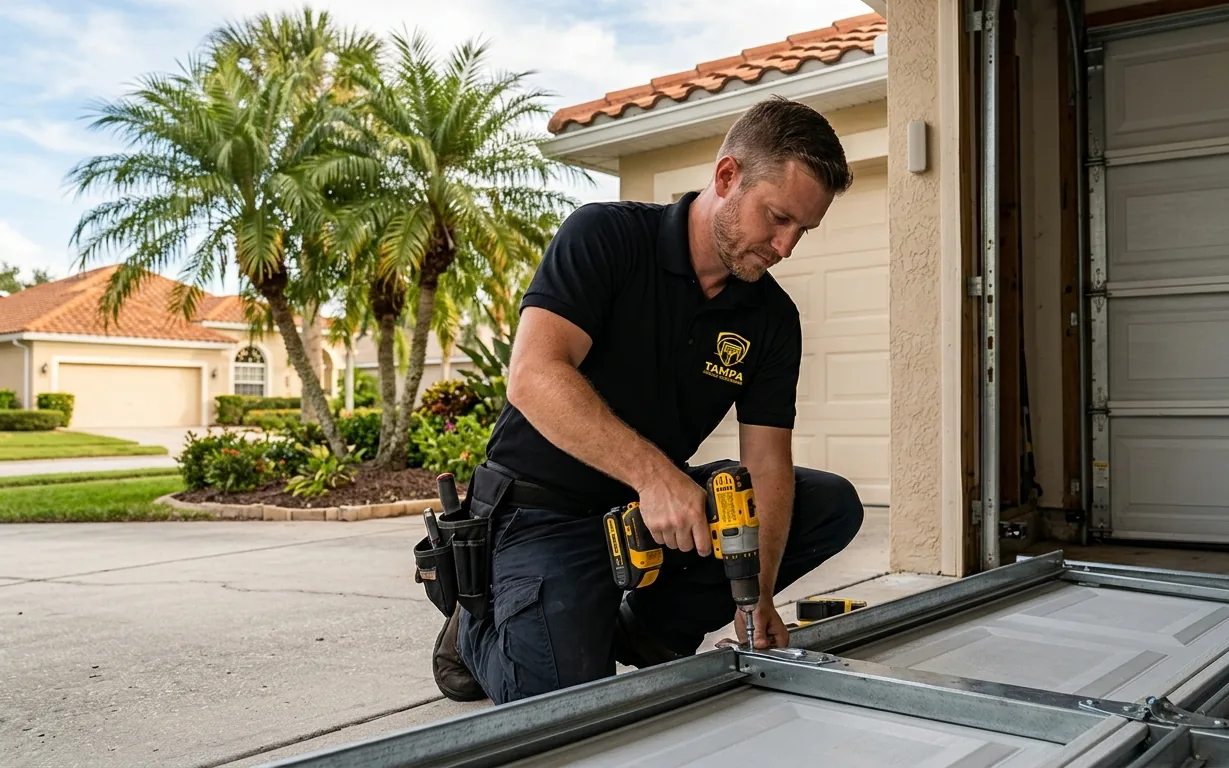
A permitted installation also means the door was inspected and the product approval documented. That paperwork is what your insurer will look for and what a buyer’s inspector will ask about.
| Item | Figure | Notes |
|---|---|---|
| Pre-2002 doors | Usually unrated | Predates the requirement |
| Post-2002 permitted | Rated | Carries a permanent label |
| Unpermitted replacement | Unknown | Common and worth checking |
| Rated upgrade on new door | +$200 – $600 | Depends on pressure required |
| Bracing kit on sound door | $285 – $580 | Interim, not equivalent |
| Full rated replacement | $1,150 – $3,400 | Single vs. double |
How to check what you have
Open the door and look at the inside face of the vertical stiles at either end. A rated door has a label with design pressure figures on it. No label does not automatically mean the door is unrated, but combined with an install date before 2002 or no permit on record, it is a reasonable conclusion.
Your county building department can tell you whether a permit was ever pulled for a garage door at your address. That is worth five minutes on the phone if you are buying, selling, or arguing with an insurer.
What a rated door actually involves
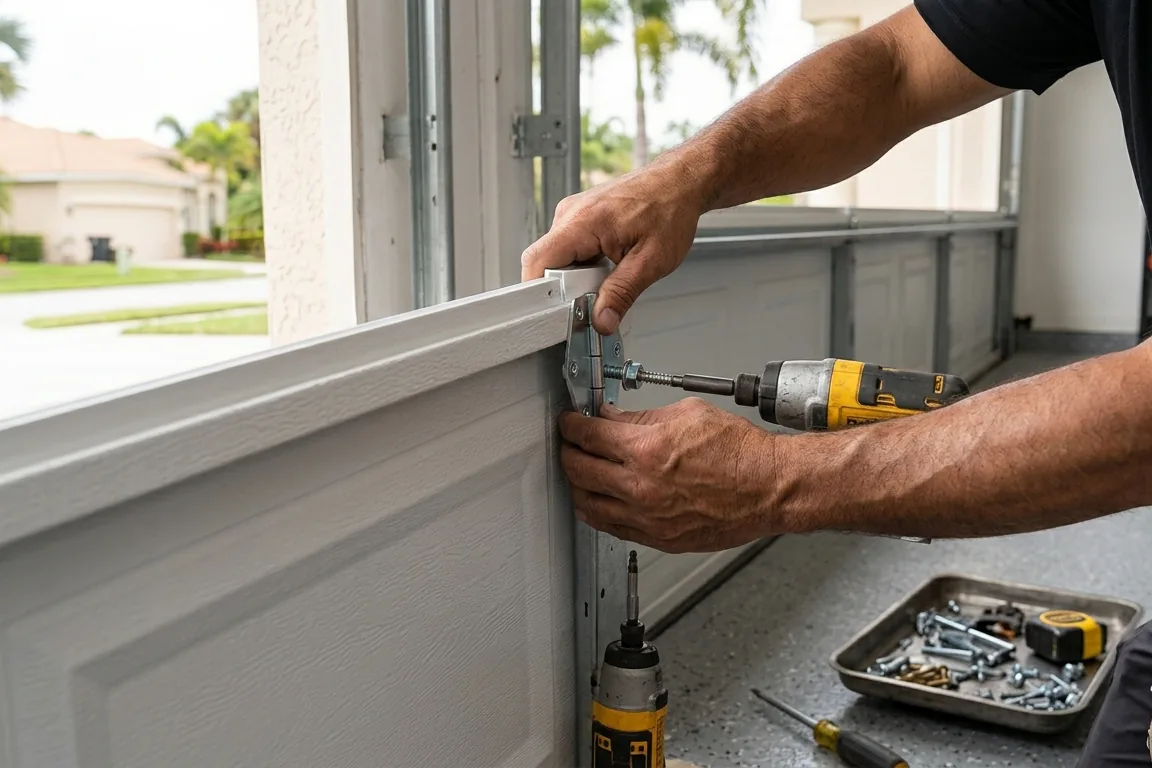
It is not just a thicker panel. A rated assembly includes heavier gauge steel or reinforcing struts across each section, stronger end stiles, heavier track and, critically, a specified fastening pattern into the jamb. That last part is why installation method matters as much as the door: a rated door fixed with the wrong fasteners into inadequate framing is not a rated installation.
This is also why we do not recommend keeping old tracks to save money on a new rated door. The track and fixings are part of what was tested.
What it will not do
A rated door resists wind pressure. It is not impact-rated unless it specifically says so, which is a separate test involving debris strikes. In most of Hillsborough, pressure rating is what code requires; impact rating matters more in designated wind-borne debris regions. Worth knowing the difference so nobody sells you the wrong thing.
Before the season, regardless of your door
- Know where the release cord is. If power goes out you will need to work the door manually.
- Do not brace it with the car. Parking against the door does nothing useful and damages both.
- Do not board over it. Plywood screwed to a garage door adds weight the springs were not balanced for and does not address pressure across the span.
- Have the springs checked. A door that is already struggling is not going to do well under load.
- Clear the tracks and check the rollers. A door that binds is a door under uneven stress.
The honest summary
If your house predates 2002 and the garage door has never been replaced, it is probably not rated, and that is worth knowing rather than discovering. It does not mean you need to spend money this month. It means you should find out where you stand, ask about bracing as an interim, and factor a rated door into your plans for whenever the current one reaches end of life. See new door installation for what that involves.
Questions
Related questions
Open the door and look at the inside face of the end stiles for a permanent label showing design pressures. No label, combined with a pre-2002 install or no permit on record, usually means unrated. Your county building department can confirm whether a permit exists.
For new installations in our area, yes — the statewide code sets design pressure requirements and permitted installs are inspected against them. Older doors installed before the requirement are not retroactively illegal, but they may affect insurance and resale.
It is the largest opening in the envelope, spanning wide with support only at the edges. If it fails, wind pressurises the building from inside and pushes up on the roof while wind outside lifts it. That combination is a documented failure sequence.
No, and we will not claim otherwise. Bracing adds real resistance to an otherwise sound door for $285 to $580 and is much better than nothing, but it does not make an unrated door code-compliant. It is an interim measure.
A new rated door installed runs $1,150 to $2,100 for a single and $1,650 to $3,400 for a double. The rating itself accounts for roughly $200 to $600 of that depending on the design pressure required for your location.
In most Hillsborough and Pasco jurisdictions, yes, because it is a structural opening governed by wind code. Permitting also documents the product approval, which is what insurers and future buyers want to see. We handle the paperwork.
No, they are separate tests. Wind rating covers pressure resistance; impact rating covers debris strikes. Pressure rating is what code requires across most of Hillsborough. Know the difference so nobody sells you a rating you were not asking for.
No. Plywood fixed to the door adds weight the springs were not balanced for and does not address pressure across the span. Proper bracing designed for the purpose is a different thing. Know where your release cord is and have the springs checked instead.
Keep reading
More garage door guides
Get your door working today
Same-day service on most repairs, a flat price before we start, and no charge for the diagnosis. Tell us what the door is doing and we will tell you what it costs.
Mon–Sat 7:00am–8:00pm · Licensed & insured · Serving Tampa, Brandon, Riverview & Wesley Chapel